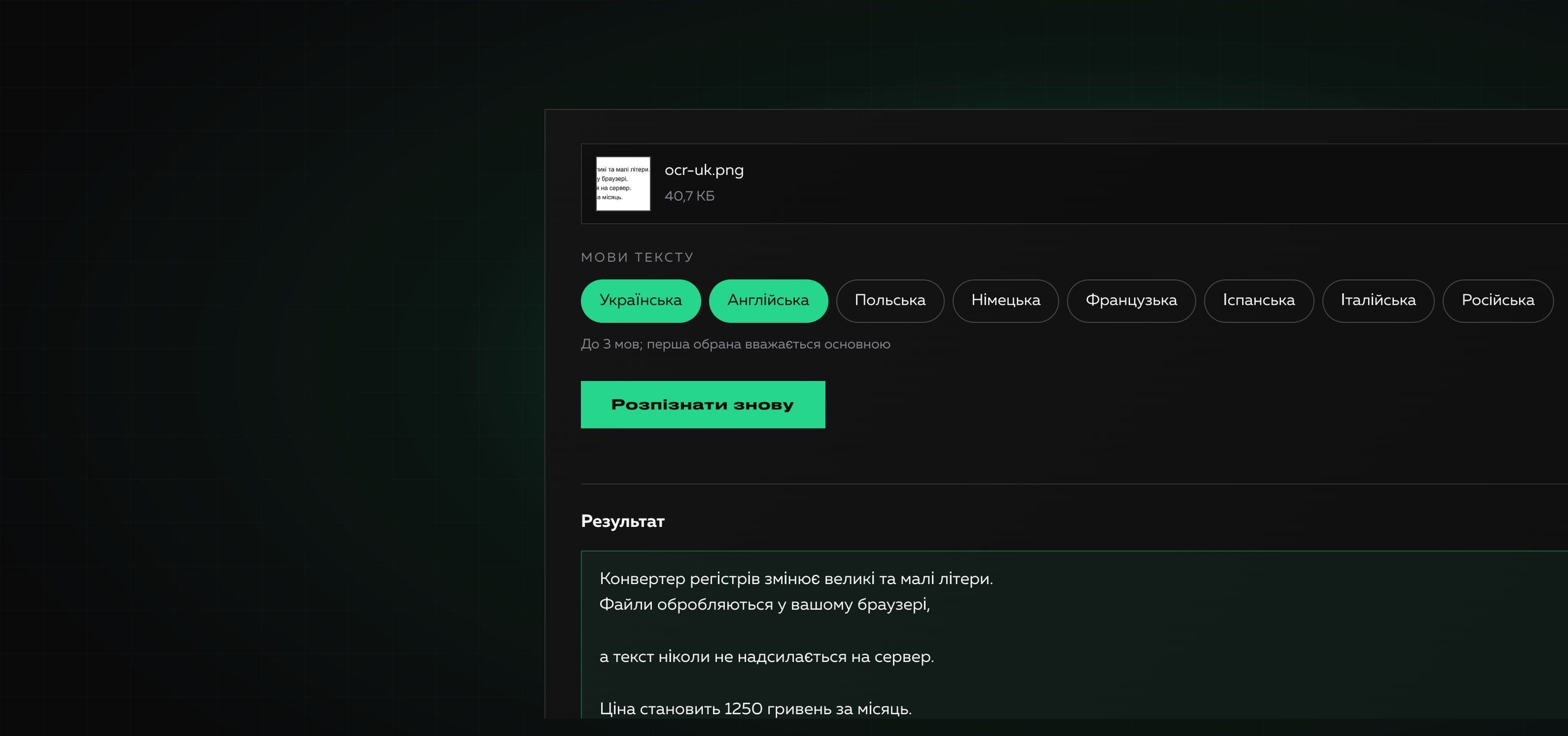
Text from Images (OCR)
Text from Images (OCR) is a Creomatix product: an online tool that extracts text from photos, screenshots and PDFs. It runs the open Tesseract engine in the browser, and both the files and the engine stay on our site. You can try it on the Text from Images (OCR) page, and we explain how to get a better result in the blog.
What was done?
A prototype built on tesseract.js was the starting point. Before launch we tested it in a real browser and found several significant problems. The engine, the WASM core and the language models were loaded from a third-party CDN on every start, so the claim that files never leave the device was only half true: the visitor's browser contacted someone else's service, and without it the tool did not work. A PDF was accepted and shown as ready for recognition, but the library cannot read PDFs, so recognition failed. Entering a link is in most cases blocked by the CORS policy of other sites, and the error explained nothing. The worker was not stopped on an error, progress was shown only for the recognition stage (during the long first download of the models the screen was silent), recognition could not be cancelled, and the confidence that was calculated was never shown to the user. There were no limits either, and the preview was built through base64, which strains memory.
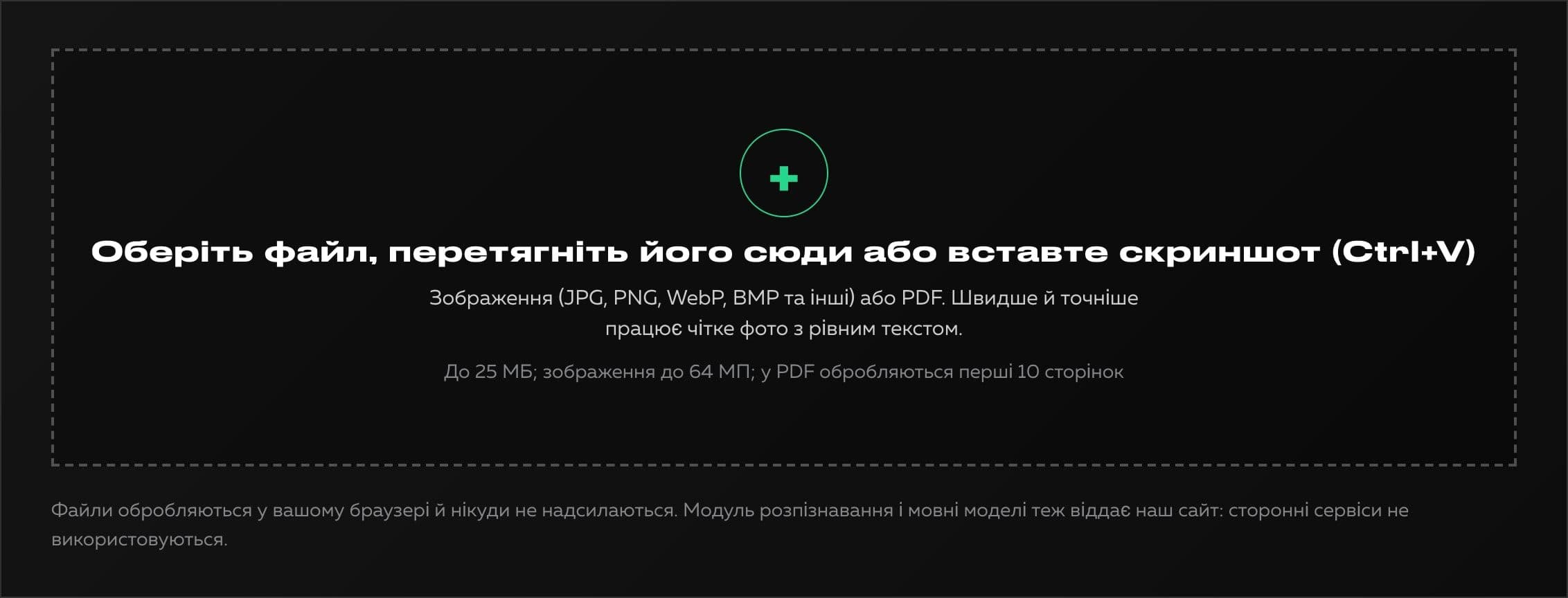
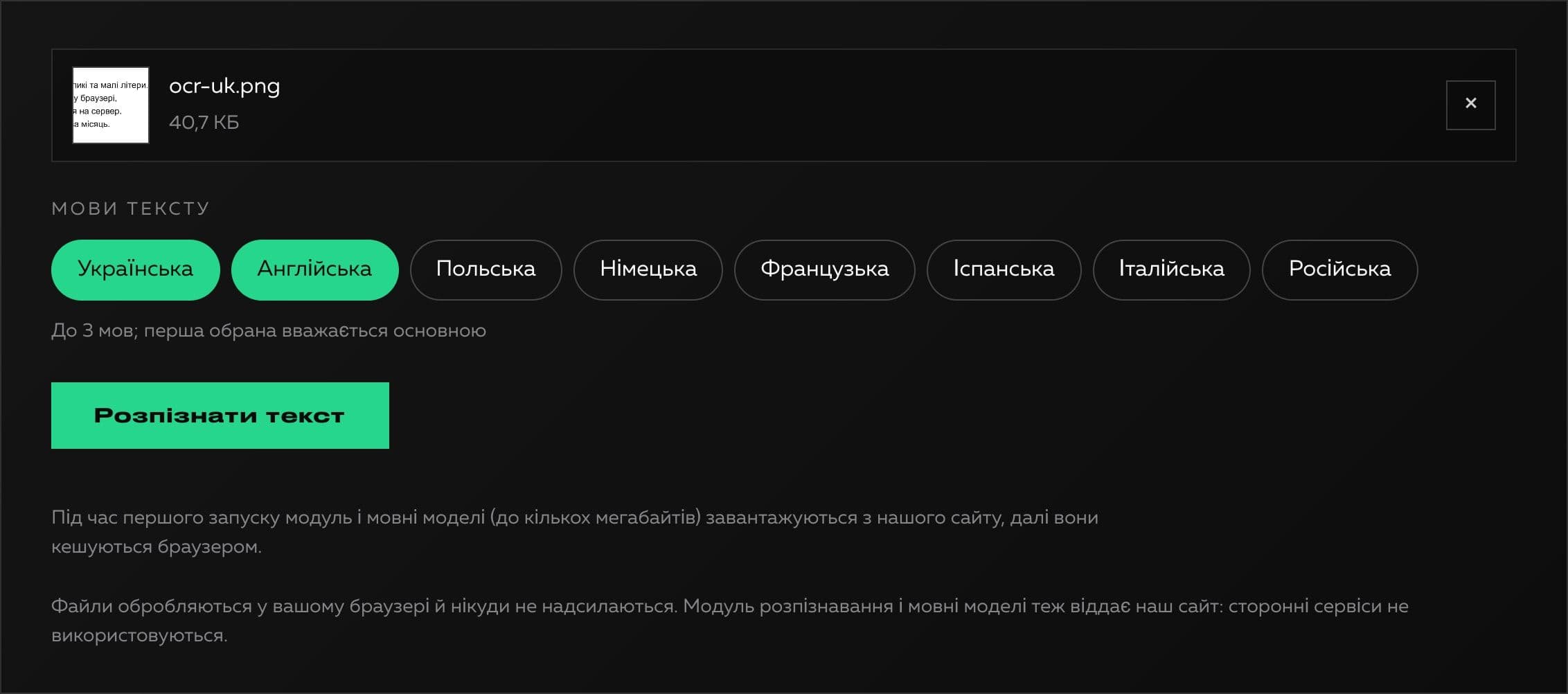
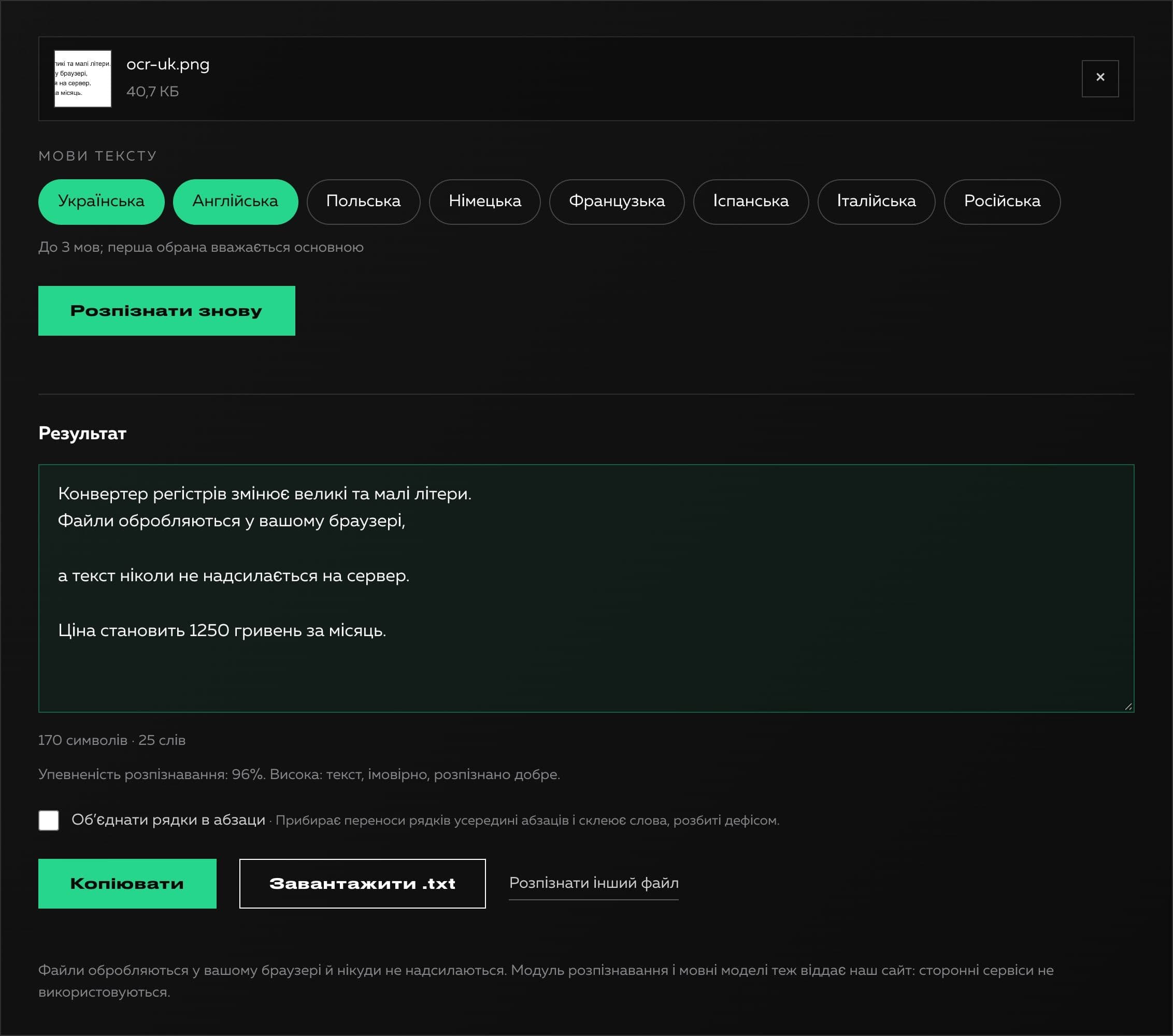
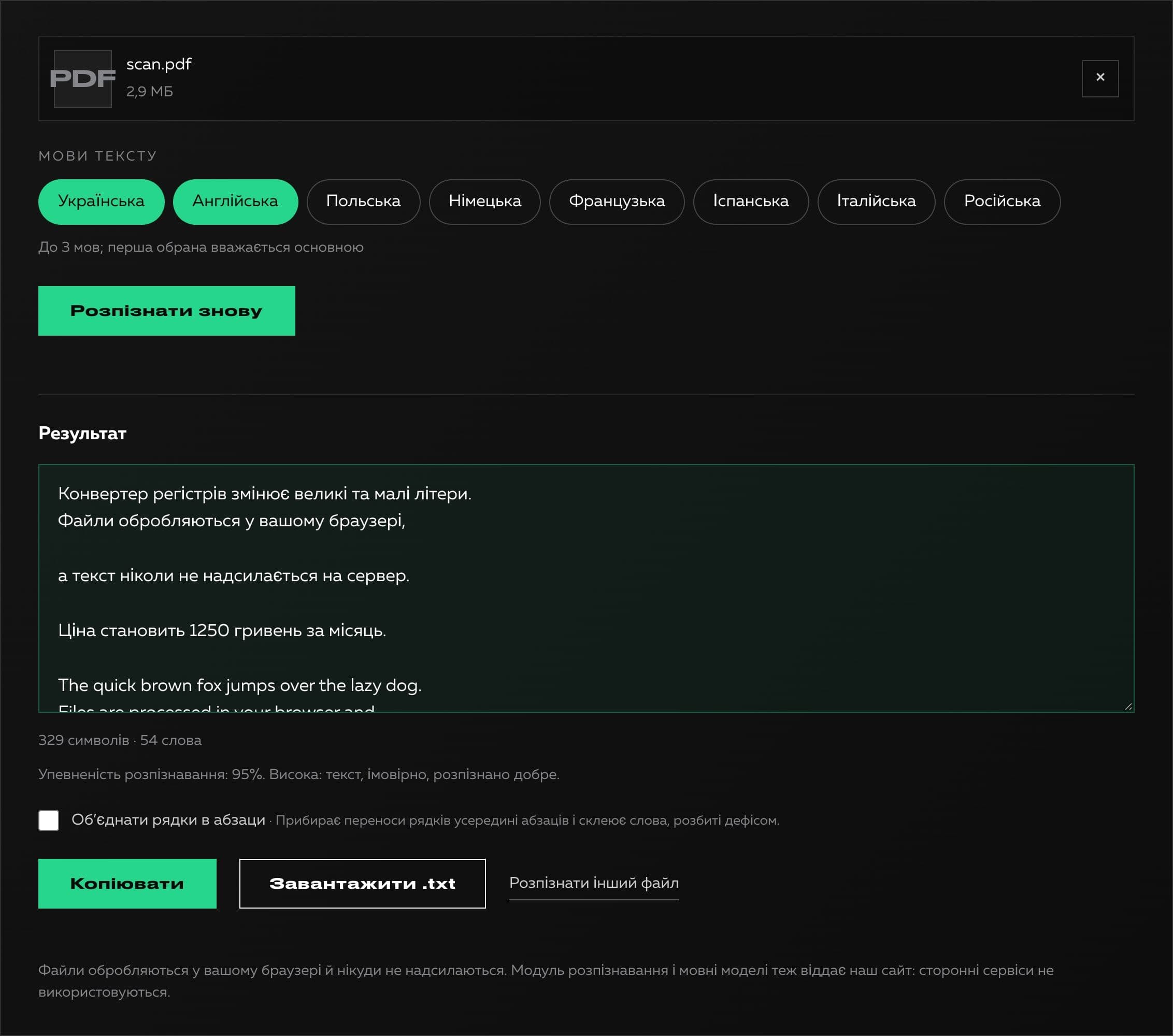
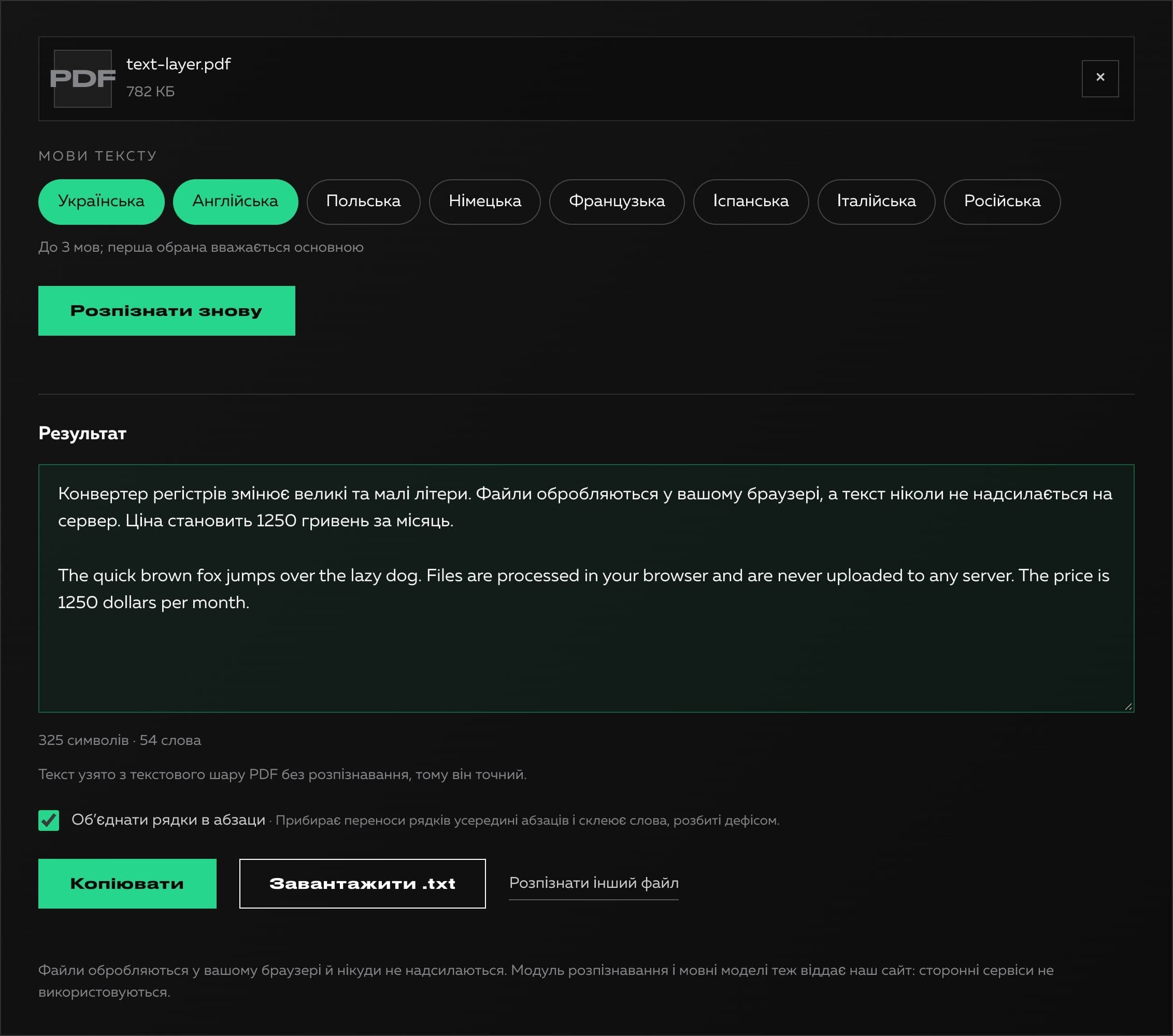
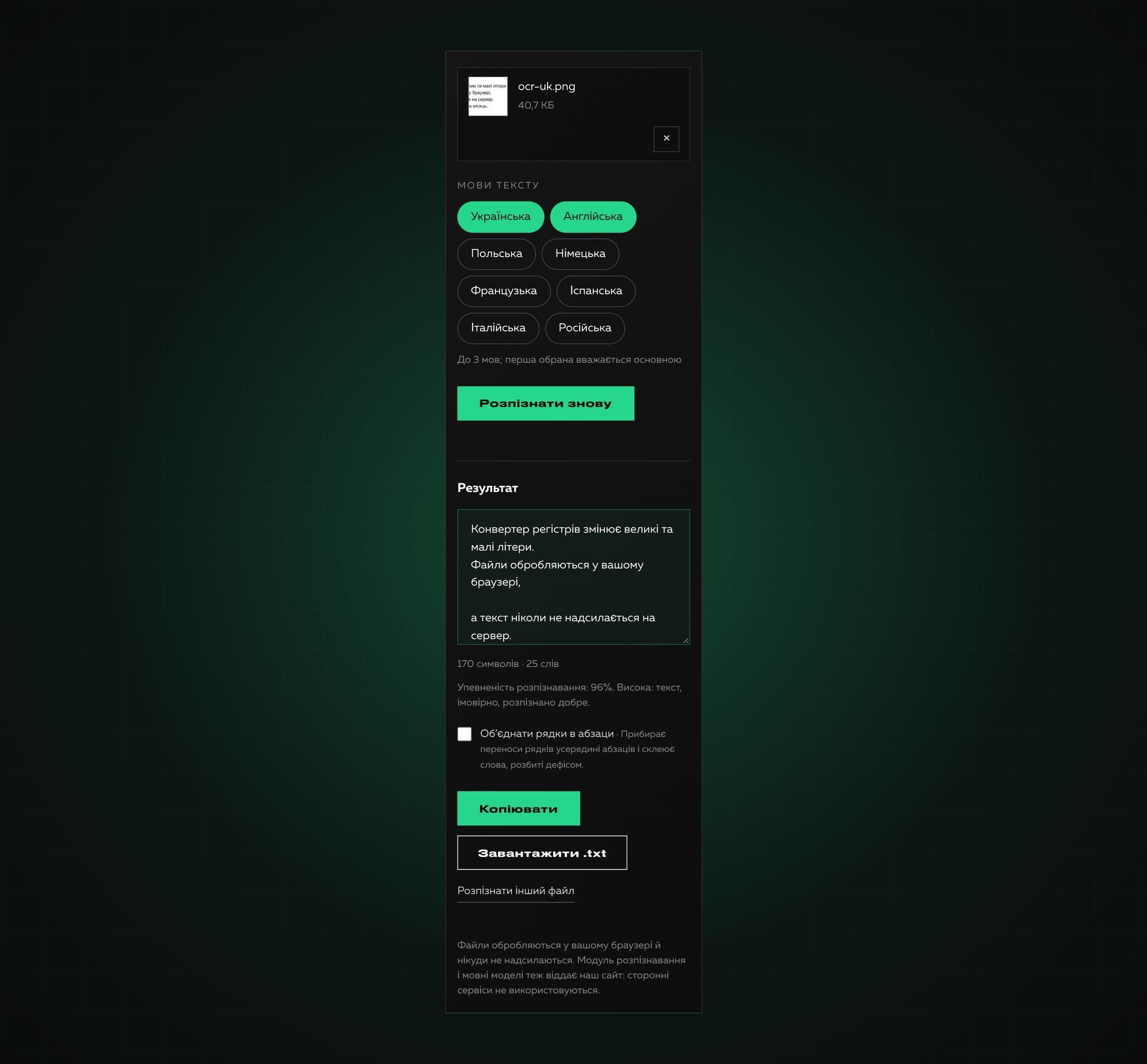
We placed the engine, the worker, the core and the models on our own site (eight languages: Ukrainian, English, Polish, German, French, Spanish, Italian and Russian) and added PDF support through PDF.js: pages with a text layer are taken exactly and without recognition, and scans are recognized page by page (up to 10 pages). Instead of entering a link there is now pasting a screenshot with Ctrl+V. We added real progress with the stage name and percentage, cancellation that does not hang, a confidence estimate with advice, counters and joining lines into paragraphs with words split by a hyphen glued back. Images have limits (up to 25 MB and 64 megapixels), and before recognition the picture is brought to a size convenient for the engine.
The interface was fully redone in the Creomatix site design, and end-to-end tests in Chrome check the work on real files: on test images with printed text the match with the reference was 90–100%, both kinds of PDF are recognized, cancellation and limits work, and not a single request leaves our site.
Technologies
- Next.js
- React
- TypeScript
- SCSS Modules
- Tesseract (tesseract.js) and tessdata models
- PDF.js
- Own hosting of the core, the worker and the languages
- Strapi (product page content)
What we built
- Recognition from photos, screenshots (Ctrl+V) and PDFs
- Eight languages, up to three at once
- PDF: the text layer is taken without recognition, scans are recognized page by page (up to 10 pages)
- The engine, the worker and the language models are served by our site: no third-party CDNs
- Real progress with the stage and percentage, and cancellation
- A recognition confidence estimate with advice
- Counters, copying, .txt download and joining lines into paragraphs
- Limits: 25 MB per file, 64 MP per image
- Transparent images are recognized on a white background
- Processing entirely in the browser: files are not sent
- Ukrainian and English interface versions
What the client got
The result is a clear and private tool: recognition runs in the browser and no third-party services are used at all. It works with images and PDFs, honestly shows progress and result quality and became the fourth product in the Products section of our site.